Pick an article, open it and copy it
Every article opens with the disclosure line and ends with a short medical note. Keep both when you post it.
 Review · 921 words
Brilliant Yoga review: what you get inside for $47
A walk through Sarah Sanders' program section by section: the 234-page ebook, the three bonuses, the price, the guarantee, and who it suits best.
Brilliant Yoga review: what you get inside for $47
I may earn a commission if you buy through my link, at no extra cost to you.
Most people who watch Sarah Sanders' video about yoga and weight loss come away with the same question. It sounds good, but what actually arrives when you pay?
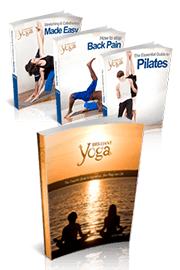
The answer is a 234-page ebook called Brilliant Yoga, three bonus guides, and a way of thinking about your body that is very different from the eat-less, move-more advice most of us grew up with. I have gone through what is inside so you can decide whether it fits you before you spend a cent.
The yoga teacher who also coaches nutrition
Sarah Sanders is a professional yoga teacher and nutrition coach. She teaches studio classes of 50 to 100 people, and her students range in age from 12 to 90, which tells you something about how gentle the starting point is.
Her whole program grows from one idea. She believes weight loss is not simply calories in versus calories out. In her view, strict diets and punishing workouts put the body under stress, stress raises cortisol, and cortisol brings cravings and makes fat harder to shift. So instead of fighting your body harder, she teaches you to work with it, using yoga postures, breathing and good food.
The full name is the Brilliant Yoga Weight Loss and Well-Being Success System, and it is split into three sections.
Section one gets your head ready before your body moves
The first section is a quick-start guide to yoga and weight loss. It walks you through the changes to expect in your body over the first 30 days, so nothing catches you off guard.
It also spends real time on your mind. Sarah gives you instructions for preparing yourself mentally for the change, because she has seen how easily people sabotage their own progress when they are not ready for it.
The part that stands out is her 12-question "fast-track perspective test". It asks you some personal questions about why you want to change, and the point is to get your reasons clear and written down before you start, so they are there to hold on to on the days motivation dips.
If you want to hear Sarah explain her thinking in her own words before reading on, her free video is here.
Section two is where the food comes in, and there is plenty of it
The second section holds the more advanced material. Sarah explains how your body's own fat-burning metabolism works and what she calls its "natural set point", the weight your body settles at when it is working the way it should.
Then comes the nutrition section, which is the part that surprises people. There is no starving here and no living on bland diet food. Sarah's approach is plenty of good, satisfying food, with simple instructions for changing your eating habits and getting cravings under control.
Section three treats stress as something you can work on
The third section deals with stress on a physical level and a mental level, which ties straight back to her big idea about cortisol and cravings.
It also gives you a selection of her yoga therapy posture sequences. You pick the ones that fit what you want to work on, rather than following one fixed routine. The ebook covers everything from yoga philosophy to step-by-step session plans, and the postures are shown with instructional photographs, so you can see exactly what each one should look like.
Sarah built all of this around simple daily adjustments that take less than 20 minutes a day, which is the main reason it fits into a busy life.
The three bonus guides
- How To Stop Back Pain explains the treatment options for back pain and gives simple daily tips you can use straight away.
- The Essential Guide To Pilates shows the most beneficial Pilates exercises to combine with what you learn in Brilliant Yoga, with a focus on core strength.
- Stretching And Calisthenics Made Easy covers fitness through stretching and calisthenics, plus nutrition and lifestyle, and includes ten do's and don'ts of working out.
Price, format and the guarantee
Brilliant Yoga costs one payment of $47. Everything comes as instant-download PDFs, so you can be reading the first section a few minutes after you order, on your phone, tablet or computer, or printed out at home.
It comes with a 60-day money-back guarantee (the order page calls it an 8-week guarantee). If it is not right for you, you email for a full refund, and Sarah says there is no fine print.
Who it suits and who should skip it
Brilliant Yoga is for people who are tired of chronic dieting and hard exercise and want a gentler routine they can keep up. It suits beginners, people who feel stiff or out of practice, and anyone whose life does not have room for an hour at the gym every day.
If you want a crash diet or a quick fix, this is not it, and Sarah says so herself. It is a method you read, try and build into your day.
If that sounds like the change you have been looking for, watch Sarah's video and see the full details here. The guarantee means you can read every page and try the sessions for yourself before you decide.
Check with your doctor before starting any new exercise or eating plan, especially if you have an injury or a health condition.
Show the HTML
 Idea article · 858 words
Why dieting harder can make weight loss harder
Eat less and move more sounds like simple arithmetic. Yoga teacher and nutrition coach Sarah Sanders explains why your body doesn't do the maths that way, and what she teaches instead.
Why dieting harder can make weight loss harder
I may earn a commission if you buy through my link, at no extra cost to you.
Picture the person on the treadmill at six in the morning. They were there six months ago too, running just as hard, and from the outside nothing much has changed.
Most of us know someone like that, and plenty of us have been that person. We cut the bread, we skip dessert, we sign up for the early class, and for a while it seems to work. Then the cravings get louder, the energy drops, and the weight we fought so hard to lose finds its way back.
When that happens, nearly everyone blames themselves. Yoga teacher and nutrition coach Sarah Sanders blames the rule we were all handed.
The rule everybody learns first
The rule is calories in versus calories out. Eat less than you burn and you lose weight. It sounds like simple arithmetic, and that is exactly why it is so convincing.
Sarah's view is that the arithmetic leaves out the most important part, which is how your body reacts to what you are doing to it. A body is not a calculator. It responds to hunger, to exhaustion and to pressure, and it responds in ways the calorie maths never mentions.
What a strict diet feels like from the inside of your body
Here is how Sarah explains it. A strict diet is a stress on the body. Grinding through punishing workouts several times a week is another stress. Put the two together and you are asking your body to cope with a lot at once.
Your body has a hormone for handling stress, called cortisol. When stress goes up, cortisol goes up with it. And according to Sarah, that is where the trouble starts, because cortisol brings stronger cravings and makes the body more inclined to hold on to fat, especially around the belly, hips and thighs.
So the harder you diet and the harder you train, the more stress you pile on, and the more you end up fighting your own body. It explains something many people have felt but never had words for: the frustrating sense of doing everything right and still getting nowhere.
Sarah walks through this idea in a short free video, and if you have ever felt that way, it is worth a few minutes of your time. You can watch it here.
Why willpower runs out
Cravings are not a character flaw. In Sarah's explanation they are partly chemical, driven by the same stress response that a hard diet switches on. That changes the whole picture, because it means trying harder can feed the very cravings you are trying to beat.
It also explains why so many diets end the same way. You can hold out against a craving for a day or a week, but holding out against your own hormones month after month is a fight most people lose eventually, and they lose it through no lack of character.
What Sarah teaches instead
Sarah's answer is to stop fighting and start working with your body. Her method rests on three things.
The first is yoga postures and breathing, chosen to calm the stress response rather than add to it. Yoga is different from conventional exercise because you do not have to push yourself to exhaustion to get something from it. Her classes include everyone from teenagers to people in their nineties, and a session can be anything from strong and sweaty to lying down and relaxing.
The second is good food, and plenty of it. No starving, and no bland diet food. Sarah coaches nutrition as well as yoga, and her approach is to eat well and get cravings under control instead of white-knuckling your way through hunger.
The third is understanding your metabolism and what she calls its natural set point, the weight your body settles at when it is not under constant attack.
Small changes that fit into a real day
Most people do not have the time or energy to rebuild their whole life around losing weight, and Sarah does not ask them to. Her method is built on a few simple adjustments that take less than 20 minutes a day.
That is a very different promise from "train harder and eat less". It asks less of you, and it is built to be something you can keep doing, which is the part every crash diet leaves out.
She has put the whole approach into a step-by-step program called the Brilliant Yoga Weight Loss and Well-Being Success System. It is a 234-page ebook with session plans and photographs of every posture, plus three bonus guides, for one payment of $47 with a 60-day money-back guarantee.
If the idea of working with your body instead of against it makes sense to you, start with Sarah's free video. Watch it here, and see whether her way of thinking explains what has been happening to you.
Check with your doctor before starting any new exercise or eating plan, especially if you have an injury or a health condition.
Show the HTML
 How-to · 1014 words
A gentle 20-minute yoga routine you can start tomorrow morning
A beginner-friendly routine for any age and any level of stiffness, with simple steps for building the habit, and where to go when you are ready for more.
A gentle 20-minute yoga routine you can start tomorrow morning
I may earn a commission if you buy through my link, at no extra cost to you.
You do not need a studio, a special outfit or the ability to touch your toes to start yoga. You need a quiet corner of a room, something soft to kneel on, and twenty minutes.
Below is a gentle routine for complete beginners. It is the kind of starting point a good teacher would give someone who feels stiff, out of practice or a little nervous, and it is easy enough to do on a tired morning. Read it through once before you try it, then keep it open on your phone beside you.
Before you begin
- Pick the same time every day if you can. First thing in the morning works well because nothing has crowded it out yet.
- Use a yoga mat, a folded blanket or a rug. A cushion under your knees helps if kneeling is uncomfortable.
- Wear anything you can move in, and go barefoot if the floor is not slippery.
- Move slowly and breathe through your nose if that feels natural. A stretch should feel like a stretch, never like pain. If something hurts, ease off or skip it.
The routine, step by step
- Sit and breathe (3 minutes). Sit cross-legged on a cushion, or on a chair if the floor is hard work. Rest your hands on your knees. Breathe in slowly, then breathe out a little more slowly than you breathed in. Let your shoulders drop a bit further each time you breathe out.
- Neck and shoulder rolls (2 minutes). Still sitting, let your chin drop towards your chest and roll your head gently from side to side. Then lift your shoulders up to your ears, roll them back and let them fall. Do this about ten times.
- Cat and cow (3 minutes). Come onto your hands and knees, with your hands under your shoulders and your knees under your hips. As you breathe in, let your belly sink and lift your gaze a little. As you breathe out, round your back towards the ceiling and tuck your chin. Move slowly between the two with your breath.
- Child's pose (2 minutes). From your hands and knees, sit your hips back towards your heels and rest your forehead on the mat or on a cushion. Let your arms lie forwards or by your sides. Breathe into your back.
- Standing reach and side stretch (3 minutes). Stand with your feet hip-width apart. Breathe in and reach both arms overhead. Breathe out and lean gently to one side, then come back to the middle and lean to the other side. Keep your knees soft.
- Seated forward fold with bent knees (2 minutes). Sit with your legs out in front of you and bend your knees as much as you need to. Breathe in to sit tall, then breathe out and fold forwards from your hips, resting your hands wherever they reach. The goal is a gentle stretch along your back, not touching your toes.
- Lying knee hug and twist (3 minutes). Lie on your back and hug your knees towards your chest. Then let both knees fall slowly to one side while your shoulders stay on the floor, hold for a few breaths, and change sides.
- Rest (2 minutes). Lie flat with your arms by your sides and your palms facing up. Close your eyes and do nothing at all. This is part of the practice, so do not skip it.
How to make it stick
The routine is the easy part. Doing it again tomorrow is where most people fall away, so make it as easy as you can for yourself.
Leave your mat out where you will see it. Tie the routine to something you already do every day, such as straight after your first cup of tea. On days when twenty minutes feels like too much, do only the breathing and the child's pose, because a short session still keeps the habit alive.
Do not judge the routine by how flexible you are. Flexibility is something yoga builds over time, not something you need on day one. A 70-year-old who turns up every morning is doing better than a 25-year-old who quits after a week of trying too hard.
Why gentle is the point
It is tempting to think a workout only counts if it leaves you exhausted. Yoga teacher and nutrition coach Sarah Sanders sees it differently. In her view, punishing workouts and strict diets are a stress on the body, and stress raises cortisol, which brings cravings and makes it harder to lose weight. Gentle yoga and slow breathing do the opposite job: they help calm that stress response.
That is why a calm twenty minutes can be a better daily habit than an hour you dread. Sarah explains the idea in her free video, which is worth watching here.
When you are ready for more
This routine is a starting point. If you enjoy it and want a proper plan, Sarah has put her whole method into a program called Brilliant Yoga.
It is a 234-page ebook with step-by-step session plans and instructional photographs, so you can see exactly how each posture should look. It includes a selection of her yoga therapy posture sequences, which you pick from depending on what you want to work on, a nutrition section built on plenty of good food with no starving, and a section on dealing with stress in both body and mind. Everything is designed around adjustments that take less than 20 minutes a day.
It costs one payment of $47, comes as instant-download PDFs and has a 60-day money-back guarantee. You also get three bonus guides on back pain, Pilates, and stretching and calisthenics.
Try the routine above tomorrow morning. If it feels good and you want to go further, see Sarah's program here.
Check with your doctor before starting any new exercise or eating plan, especially if you have an injury or a health condition.
Show the HTML
 List article · 815 words
7 reasons yoga suits people who have given up on diets
If every diet you have tried ended with cravings and frustration, yoga asks for something completely different. Here are seven reasons it fits people who are done with dieting.
7 reasons yoga suits people who have given up on diets
I may earn a commission if you buy through my link, at no extra cost to you.
There is a moment many people reach after their fourth or fifth diet. They look at the latest plan, the latest list of banned foods, the latest promise, and they think: I cannot do this again.
If you have reached that moment, you have not failed. You have learned something about what does not work for you. And yoga, done gently and paired with good food, asks for something very different from the diets that wore you out. Here are seven reasons it fits people who are done with dieting.
1. It does not ask you to go hungry
Yoga is not a food plan, so there is nothing to starve yourself through. Yoga teacher and nutrition coach Sarah Sanders pairs it with plenty of good, satisfying food, and she is firm that the days of bland diet food and going hungry are over. When you are not hungry all the time, there is far less to rebel against.
2. You do not have to push yourself to exhaustion
Most exercise plans measure success by how wrecked you feel afterwards. Yoga does not work that way. Sarah's classes range from strong, sweaty sessions to lying down and relaxing, and you choose the level that suits you that day. You get something from it without dreading it.
3. It works on stress, which strict diets add to
This one surprises people. As Sarah explains it, a strict diet is a stress on the body, and so are punishing workouts. Stress raises a hormone called cortisol, and cortisol brings stronger cravings and makes the body more likely to hold on to fat.
Yoga postures and slow breathing help calm that stress response, which means yoga works on a part of the problem a diet never touches. Sarah lays out this whole idea in a free video, and it is the clearest explanation of it I have come across. You can watch it here.
4. Twenty minutes fits into a real day
Many diets fail because they take over your life: shopping lists, weighing food, cooking separate meals, hours at the gym. Sarah's approach is built on simple adjustments that take less than 20 minutes a day. That is short enough to fit before work, after the school run or before bed, and short enough to keep doing next month.
5. Your age and your flexibility do not matter at the start
You do not have to be young or bendy to begin. Sarah teaches studio classes of 50 to 100 people, and her students range from 12 to 90 years old. Yoga meets you where you are today. If you cannot touch your toes, you bend your knees, and that is still yoga.
6. You can do it at home with almost nothing
There is no membership to pay for and no equipment to buy. A mat or a soft rug and a little floor space are enough. If you learn from clear session plans with photographs of each posture, you can practise in your living room without anyone watching.
7. It starts with your head, not your waistline
Diets jump straight to rules about food. A good yoga practice starts with how you think about the change, and Sarah builds this into her program. Before anything else she asks you to work through a 12-question "fast-track perspective test" that gets clear on why you want to change, and she gives you instructions for preparing your mind so you do not sabotage your own progress.
That might sound soft, but it tackles the reason so many diets end: the motivation was never really yours, so it ran out.
Where to start
If these seven reasons sound like the opposite of every diet you have tried, that is the point. Sarah has put her whole method into a program called the Brilliant Yoga Weight Loss and Well-Being Success System.
It is a 234-page ebook with step-by-step session plans and instructional photographs, a nutrition section built on eating well, a section on handling stress in body and mind, and a choice of yoga therapy posture sequences you pick from depending on what you want to work on. Three bonus guides come with it: How To Stop Back Pain, The Essential Guide To Pilates, and Stretching And Calisthenics Made Easy.
It is one payment of $47, delivered as instant-download PDFs, with a 60-day money-back guarantee, so you can try it without risking the money.
If you are done with diets but not done with feeling better in your body, watch Sarah's free video and see the program here.
Check with your doctor before starting any new exercise or eating plan, especially if you have an injury or a health condition.
Show the HTML
 Comparison · 836 words
Strict diet and gym plan, or yoga and good food? How the two compare
A side-by-side look at the two most common ways people try to lose weight: how each one feels, what each costs in time and money, and which one is easier to keep doing.
Strict diet and gym plan, or yoga and good food? How the two compare
I may earn a commission if you buy through my link, at no extra cost to you.
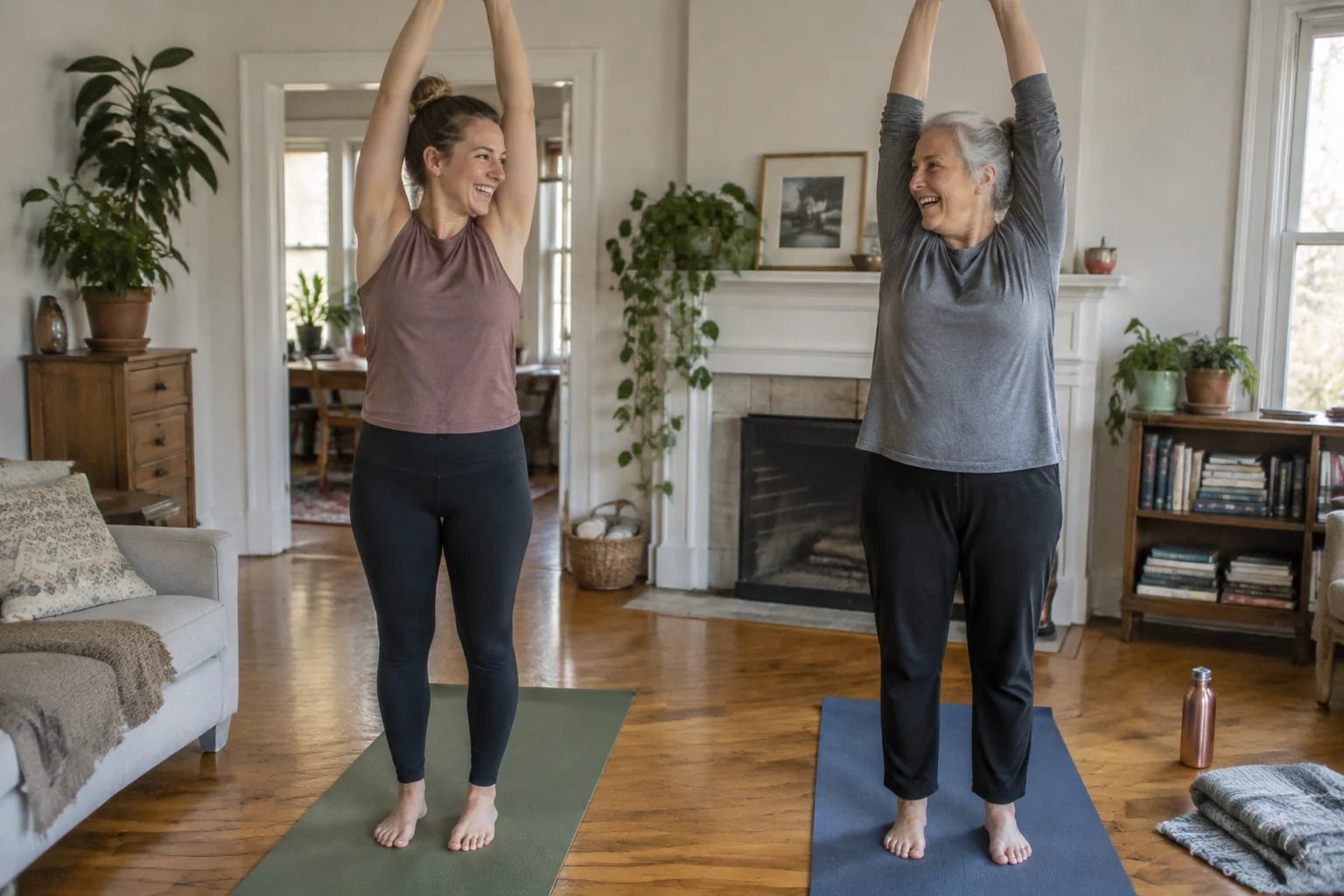
Every January, two kinds of plans get going. One is the strict plan: a diet with a list of forbidden foods and a gym timetable that starts at five days a week. The other is quieter: a bit of gentle yoga every day and meals that actually fill you up.
The strict plan usually looks more serious, and that is part of its appeal. But the plan that looks toughest in January is not always the one still running in March. Here is how the two compare where it counts.
How the first week feels
On a strict plan, the first week is often the hardest. You are hungry, your muscles ache, and you are spending a lot of willpower saying no to food. Some people love that challenge. Many more grit their teeth and count the days.
With yoga and good food, the first week asks much less of you. You eat proper meals and spend around twenty minutes on a mat. It can feel almost too easy, which is exactly why people are still doing it a few weeks later.
What each one does to stress
This is the difference most people never think about. Yoga teacher and nutrition coach Sarah Sanders explains that strict dieting and punishing workouts are both stresses on the body. Stress raises a hormone called cortisol, and in her explanation cortisol brings stronger cravings and makes the body more likely to hold on to fat.
So a strict plan can pile stress on top of a life that is often stressful already. Gentle yoga and slow breathing work the other way, helping to calm the stress response. Sarah walks through this idea in a short free video that is well worth watching if you have ever wondered why trying harder did not seem to help.
Time, money and kit
A gym plan usually means a membership fee, travel time, and an hour or more per session once you have changed and showered. A strict diet often means special foods, separate meals for you and the family, and time spent weighing and tracking.
Yoga at home needs a mat or a soft rug and a little floor space. Sarah's method is built around adjustments that take less than 20 minutes a day, and good food means the same meal on the table for everyone.
What happens when life gets busy
Every plan meets a bad week sooner or later: a sick child, a deadline, a trip. A strict plan tends to break in that week, because it needs time and energy you suddenly do not have. Once it breaks, many people feel they have failed and stop altogether.
A twenty-minute routine bends instead of breaking. On a terrible day you can still do five minutes of breathing and a stretch, and the habit survives.
Where the strict plan has the edge
It is only fair to say that a hard plan suits some people. If you thrive on structure and intensity, enjoy the gym, and are not fighting constant cravings, it may work well for you. Some people genuinely enjoy hard training and keep it up for years.
The trouble is that most people who are searching for a different way have already tried the hard plan, sometimes several times, and it did not last. For them, the gentler route is the one worth testing.
The two side by side
| Strict diet and gym plan | Yoga and good food | |
|---|---|---|
| Food | Restricted, often hungry | Plenty of good food, no starving |
| Effort | Push hard most sessions | Choose your level, from strong to restful |
| Stress | Adds stress, as Sarah explains it | Helps calm the stress response |
| Time | An hour or more per gym session | Less than 20 minutes a day |
| Cost and kit | Membership, special foods | A mat or rug at home |
| Bad weeks | Often breaks the plan | Shrinks to five minutes and carries on |
If you want to try the gentler route properly
Sarah has turned her approach into a program called the Brilliant Yoga Weight Loss and Well-Being Success System. It is a 234-page ebook with step-by-step session plans and instructional photographs, a nutrition section built on plenty of good food, a section on dealing with stress in body and mind, and a choice of yoga therapy posture sequences you pick from depending on what you want to work on. Her students range in age from 12 to 90, so it starts gently.
It costs one payment of $47, comes as instant-download PDFs with three bonus guides, and has a 60-day money-back guarantee.
If you have done the hard plan and want to see what working with your body feels like instead, watch Sarah's free video here.
Check with your doctor before starting any new exercise or eating plan, especially if you have an injury or a health condition.
Show the HTML
 FAQ article · 874 words
Brilliant Yoga questions answered: price, guarantee, format and more
The questions people ask most before they buy Brilliant Yoga, answered in plain words: the cost, the guarantee, what arrives, age, flexibility, time and the bonuses.
Brilliant Yoga questions answered: price, guarantee, format and more
I may earn a commission if you buy through my link, at no extra cost to you.
When people hear about Brilliant Yoga, the same questions come up again and again. How much is it? What arrives when you buy? Am I too old, too stiff or too busy? Here are the answers, all in one place, so you can decide with the full picture in front of you.
What is Brilliant Yoga?
Its full name is the Brilliant Yoga Weight Loss and Well-Being Success System. It is a program by Sarah Sanders, a professional yoga teacher and nutrition coach who teaches studio classes of 50 to 100 people.
The idea behind it is that weight loss is not simply calories in versus calories out. Sarah teaches that strict diets and punishing workouts stress the body, stress raises cortisol, and cortisol brings cravings and makes fat harder to lose. Her answer is to work with your body using yoga postures, breathing and good food.
How much does it cost?
One payment of $47. There is nothing else you have to buy to use the program.
Is there a money-back guarantee?
Yes. Brilliant Yoga comes with a 60-day money-back guarantee, which the order page describes as an 8-week guarantee. If it is not right for you, you email for a full refund. Sarah says there is no fine print.
What do I actually get?
The main program is a 234-page ebook. It runs from yoga philosophy through to step-by-step session plans, with instructional photographs of the postures. It has three sections:
- A quick-start guide to yoga and weight loss, what to expect over the first 30 days, how to prepare your mind for the change, and a 12-question "fast-track perspective test" on why you want to change.
- The more advanced material on your body's fat-burning metabolism and its natural set point, and a nutrition section with plenty of good food, no starving and help with cravings.
- Dealing with stress on a physical and mental level, and a selection of yoga therapy posture sequences you choose from depending on what you want to work on.
If you would like Sarah to explain the thinking herself first, her free video is here.
What format is it in?
Everything comes as instant-download PDFs. You can read them on a phone, tablet or computer, or print the pages you want next to your mat. There is no waiting for anything to arrive in the post.
How soon can I start?
Straight away. You get access to the downloads as soon as your order goes through.
Am I too old for this?
Sarah's students range in age from 12 to 90. Yoga can be adjusted to almost any body, and the posture sequences let you pick what suits you.
I am not flexible at all. Can I still do it?
Yes. Flexibility is something yoga builds over time; you do not need it to begin. Sarah's sessions range from strong and sweaty to lying down and relaxing, so you start at a level that feels right for you and go from there.
How much time does it take?
Sarah built the method around simple adjustments that take less than 20 minutes a day. It is designed to fit around work, family and everything else, rather than taking over your day.
Do I have to go on a diet?
No. The nutrition section is about eating plenty of good, satisfying food and getting cravings under control. There is no starving yourself and no living on bland diet food.
Do I need any equipment?
Not really. A yoga mat or a soft rug and a little floor space at home are enough to begin.
What are the bonuses?
- How To Stop Back Pain, which explains the treatment options and gives simple daily tips.
- The Essential Guide To Pilates, with the most beneficial Pilates exercises to combine with what you learn in Brilliant Yoga.
- Stretching And Calisthenics Made Easy, covering stretching, calisthenics, nutrition and lifestyle, including ten do's and don'ts of working out.
Is anything else offered when I order?
The order page also offers an optional monthly membership with the first month free and a monthly charge after that. It is an extra, and you do not need it to use Brilliant Yoga. Read the order page carefully and only choose it if you want it.
Will I lose weight?
Nobody can promise you a number, and you should be wary of anyone who does. What Brilliant Yoga gives you is a complete method from a yoga teacher and nutrition coach: gentle daily yoga, good food, a way to handle stress, and a clear reason to keep going. How it works for you depends on you, and the 60-day guarantee means you can try it in your own life before you decide.
Where do I get it?
Start with Sarah's short video, which explains her two key ideas about weight loss, then the order button appears below it. Watch the video and get Brilliant Yoga here.
Check with your doctor before starting any new exercise or eating plan, especially if you have an injury or a health condition.